02 · 2025 · Projects · 11 readers
Paw Social
A dog-first social network for discovering friends, sharing moments, and organizing real-world meetups. I designed it in Figma and shipped it on web and iOS.
- Role
- Solo founder / full-stack
- Focus
- Product · Design · Engineering
- Stack
- Next.js · TypeScript · React · Native iOS · Figma
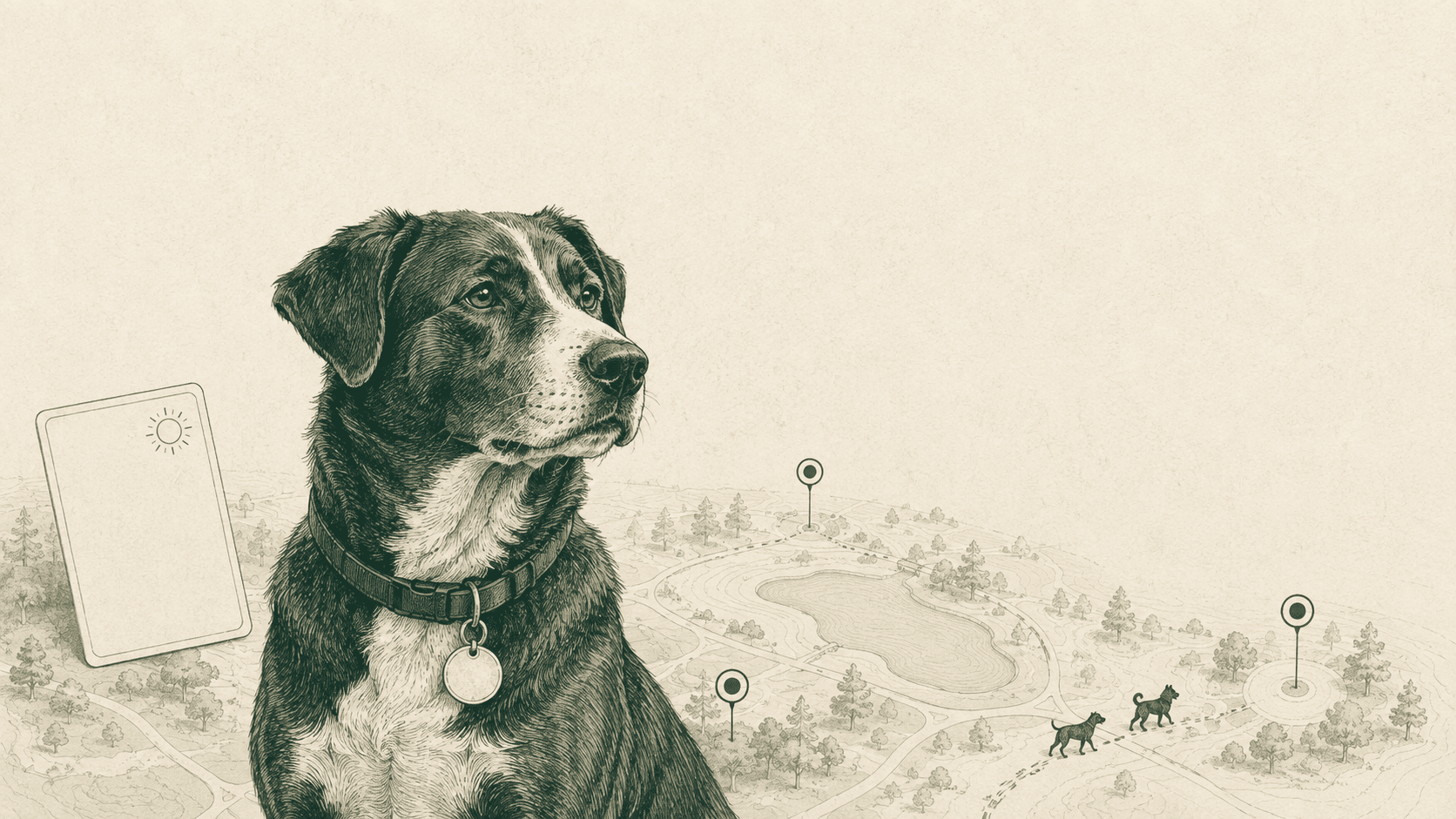
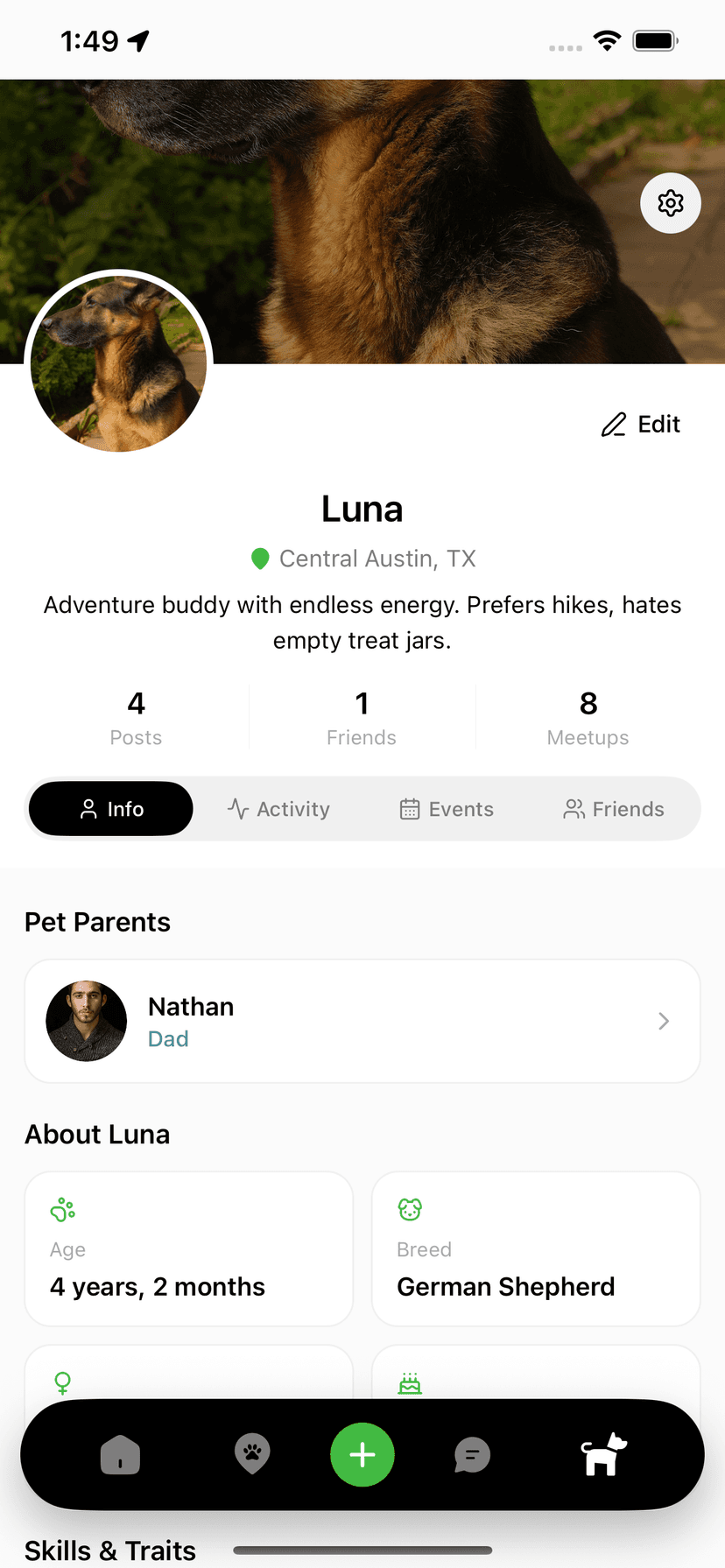
Paw Social flips the usual pet-app model: the dog is the profile, not the owner. Owners still show up as pet parents, but the feed, friendships, and meetups revolve around the dog’s identity.
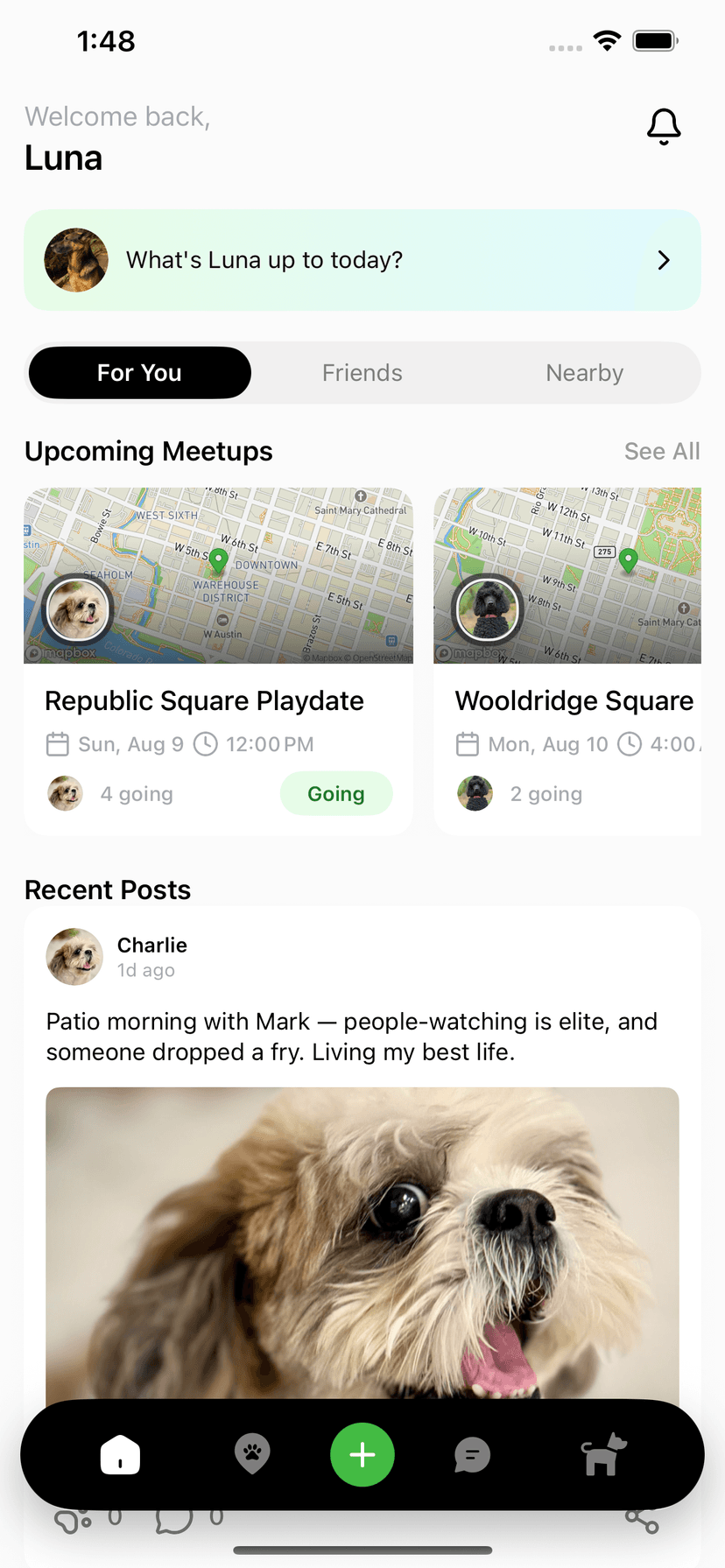
I designed the mobile experience in Figma, then shipped the same product on web and native iOS: social feed, local meetups, and realtime chat. Live at pawsocial.app.
At a glance
- Role
- Solo founder: design through ship
- Platforms
- Web + native iOS
- Stack
- Next.js, TypeScript, React, native iOS, Figma, maps, realtime
- Design
- Figma system to production UI (dark-first mint brand)
- Live
- pawsocial.app
01 · Context
What problem does Paw Social solve?
Dog owners already post about their pets, just not in a place built for local, dog-shaped connection. Typical social apps treat the human as the primary identity. Meetup tools are generic. Pet apps often stop at profiles or adoption listings.
What’s missing is a single product that combines identity (a dog profile people recognize and follow), social (posts, feelings, comments, friendships), local (map-based discovery of spots and playdates), and realtime messaging so online interest becomes an offline walk.
02 · Goals
What the product had to do
Make onboarding feel playful without feeling childish. Ship a feed that supports photo posts and distinctive “feeling” posts. Make meetup discovery map-native, not a buried list. Keep web and mobile in parity from day one. Use a real design system: tokens, components, screens, instead of one-off UI.
03 · Design
What does the brand system look like?
The visual language is dark-first, with calm charcoal surfaces and mint/leaf accents for action. Brand energy shows up in create CTAs, liked states, feeling cards, and AI “dog voice” moments, not in noisy chrome.
Figma held the full mobile system: navigation, buttons, tabs, inputs, post cards, meetup cards, chips, avatars, typography, and color, then mapped into production tokens and components.
04 · Product
What people actually use
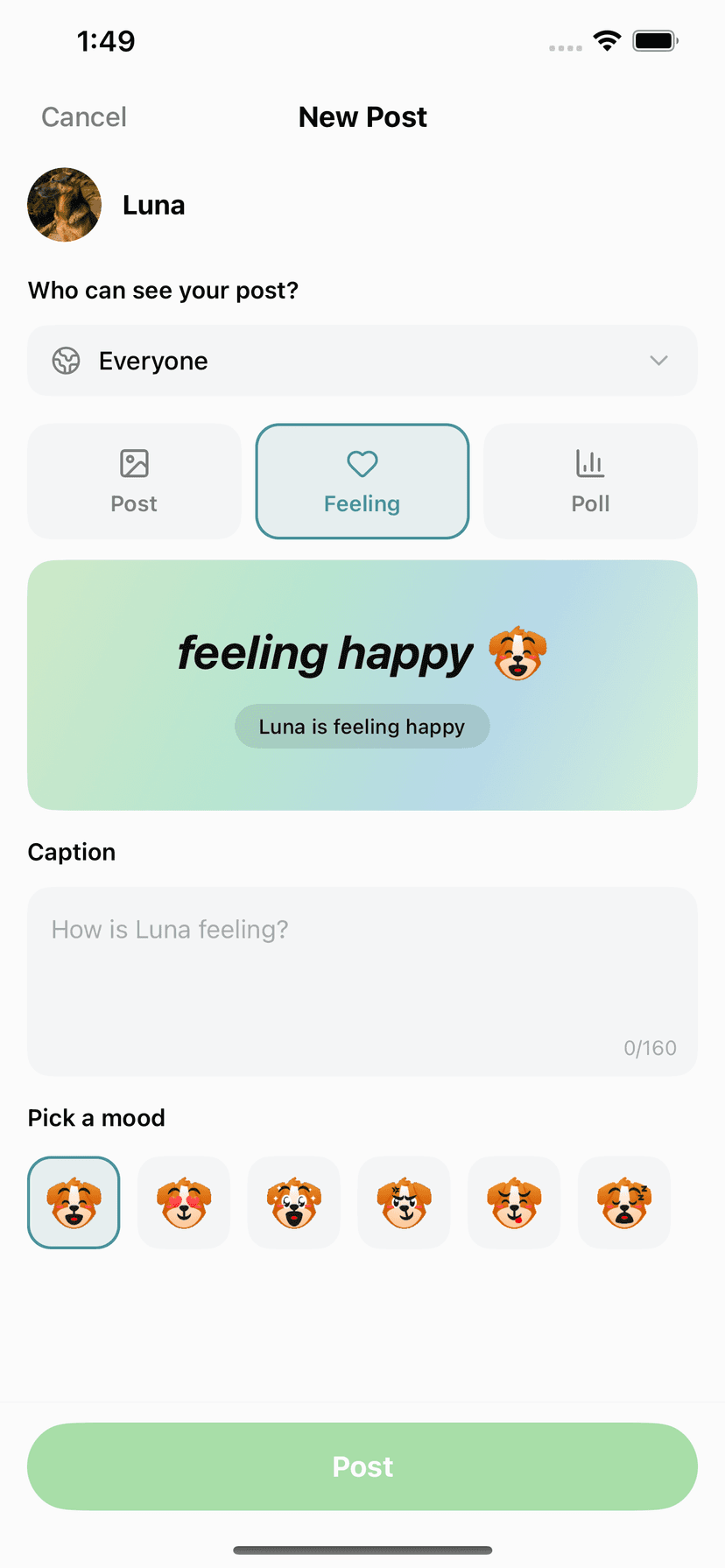
Feelings are first-class content: mood cards with a chip like “[Dog] is feeling happy,” alongside photos and polls. Profiles are dog-centric: cover, avatar, stats, pet-parent cards, and about chips.
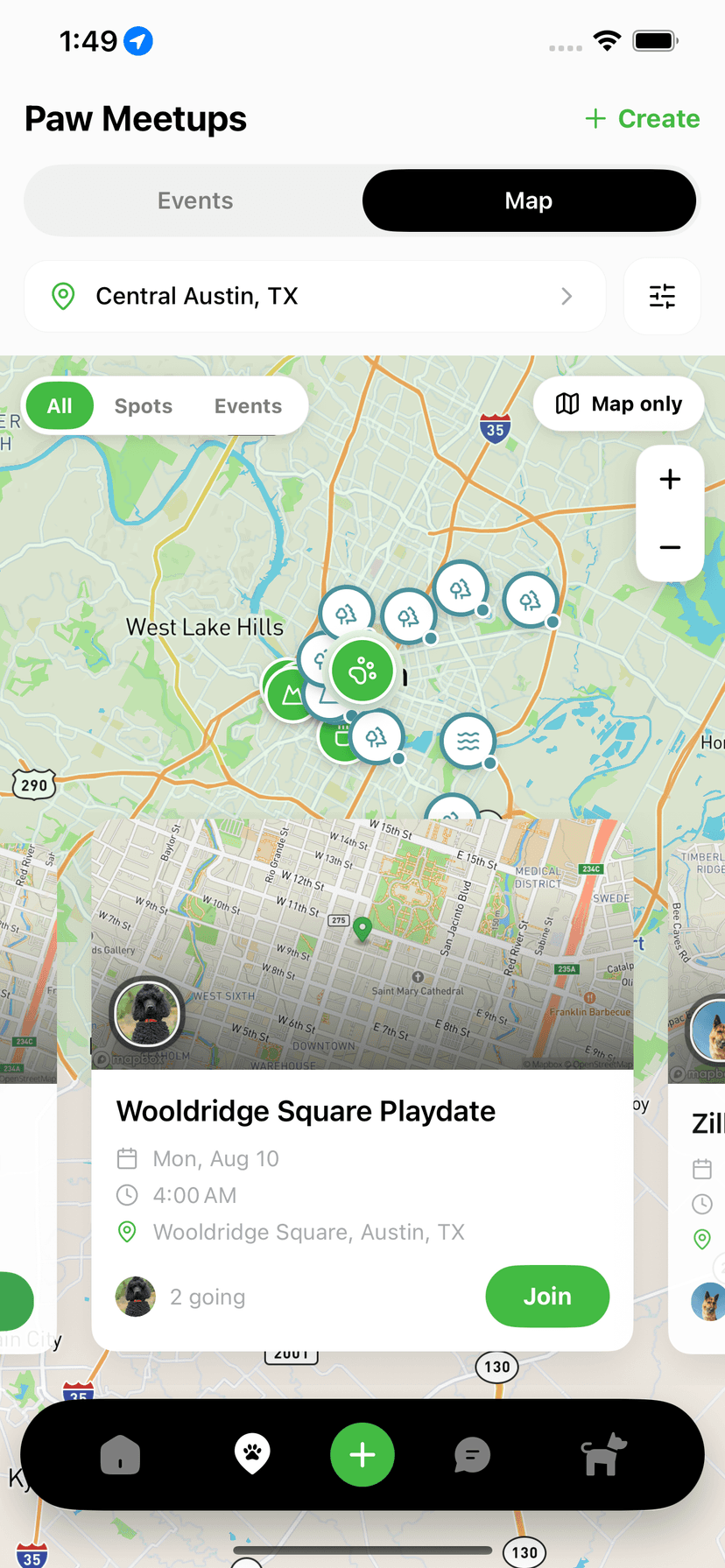
Meetups are map-first: markers for spots and events, cards with date and attendance, and one-tap Join. Messaging turns interest into a walk: threads, presence, and a send affordance that matches the brand.
05 · Solution
What shipped end to end?
Auth and onboarding gate into a dog-first identity model. The feed covers posts, feelings, polls, likes, and comments. Friendships, suggestions, and find-friends filters make the social graph usable. Meetups support create, RSVP, and map discovery. Chat stays live. Media uploads stay off the critical path. An AI caption rewrite gives posts a playful “dog voice.”
06 · Systems
How it’s structured
Web and iOS share auth and product APIs so features stay in parity. Social graph and feed data live in a relational store; chat and presence use a realtime layer. After mutations, caches invalidate in a targeted way so the feed stays fast without serving stale social state.
Ownership is resolved server-side for every sensitive action (likes, friendships, RSVPs) so the client never gets to assert “this is my dog” on its own.
07 · Decisions
Which tradeoffs stuck?
Dog as the user. The primary entity is the dog; humans are pet parents attached to that identity. That choice shaped onboarding, the feed, and every permission check.
Feelings as a content type. A light schema change unlocked a completely different card treatment, distinctive in the feed without a separate product surface.
Map-first meetups. List and map share one events model; the map is discovery, the list is for scanning and hosting.
End-to-end product: marketing to auth to onboarding to feed to meetups to chat to profile, on web and native iOS.
08 · Outcome
What I’d highlight
Product taste: dog-first identity, feeling posts, map-native meetups. Systems thinking: shared clients, split data concerns, careful caching. Design ownership: Figma system to tokens to shipped UI. Cross-platform delivery: one product story on web and iOS.